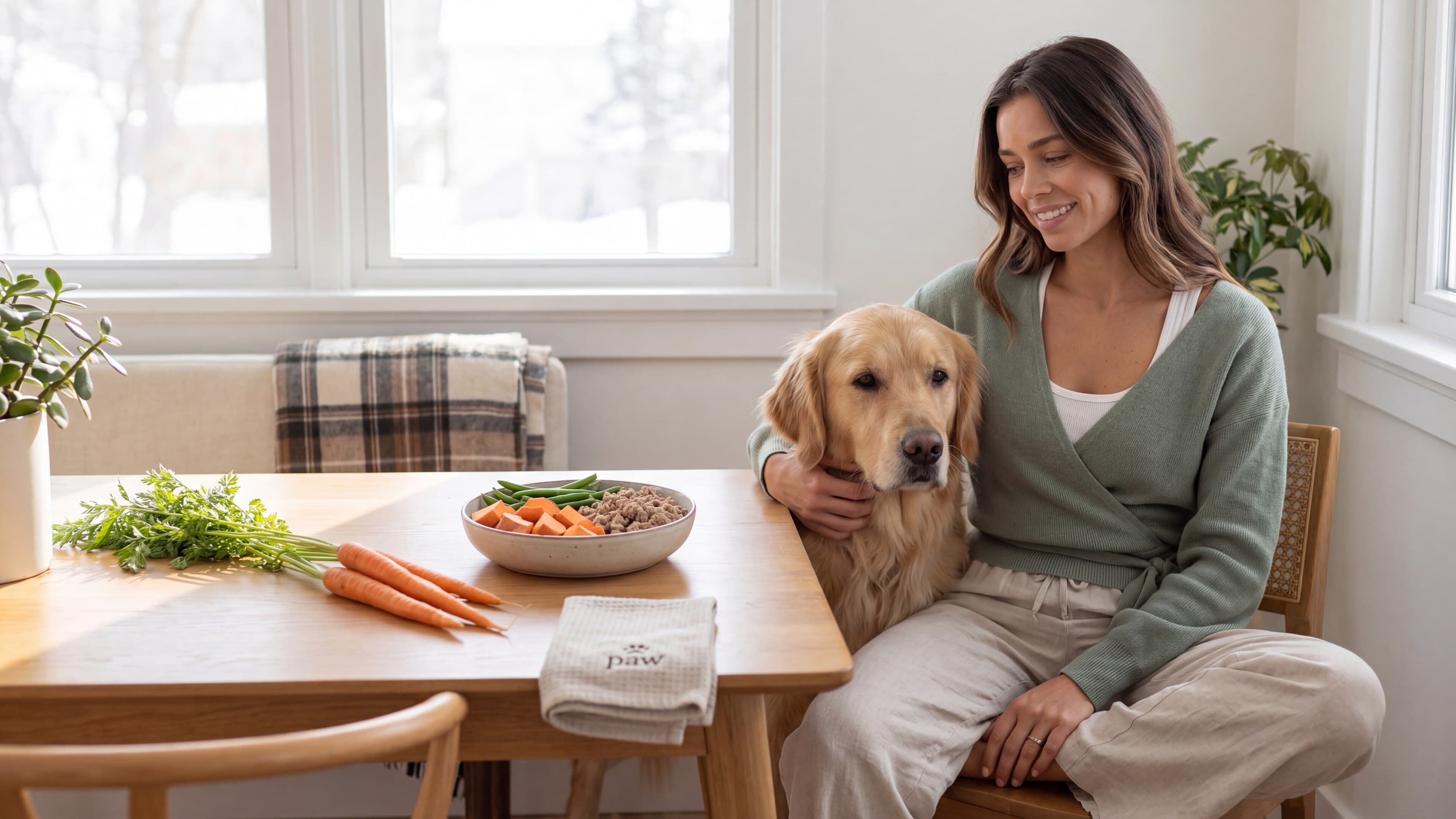
Homemade Dog Food: What Every Loving Owner Should Know
There's something deeply nurturing about preparing your dog's food at home.
It feels intentional. Personal. Loving.
And in many ways, it is.
But here's the truth I share gently and clearly: cooking for your dog is not the same as cooking for yourself.
Dogs have specific nutritional requirements. Missing just a few key nutrients over time can create serious deficiencies.
If you want to do this well, you absolutely can — you just need structure.
First: Understand the Risk of Imbalance
Many homemade diets are unintentionally low in:
- Calcium
- Iodine
- Zinc
- Copper
- Vitamin D
- Essential fatty acids
And over time, that imbalance can lead to:
- Weak bones
- Heart issues
- Thyroid dysfunction
- Poor immune health
- Developmental problems in puppies
Love must be supported by science.
The Foundation of a Balanced Home Recipe
A basic structure (not a complete formula, but a guide) includes:
1. High-Quality Protein
Cooked chicken, turkey, beef, lamb. Lean cuts. Fully cooked (no seasoning, no onion, no garlic).
Protein supports muscle, immune health, and organ function.
2. Healthy Carbohydrates
White or brown rice, sweet potatoes, oats, quinoa.
These provide energy and fiber. Always cooked and plain.
3. Vegetables
Carrots, green beans, peas, spinach, pumpkin.
Lightly steamed or pureed for digestibility. Avoid grapes, onions, garlic, and avocado.
4. Healthy Fats
Salmon oil, flaxseed oil, or a small amount of coconut oil.
Fats support coat health, brain function, and nutrient absorption.
5. Supplements
This is where most homemade diets fall short.
A canine-specific multivitamin or supplement blend is often necessary to fill nutritional gaps — especially calcium, zinc, and vitamin D.
The Most Important Step
Talk to your veterinarian or a board-certified veterinary nutritionist.
They can evaluate your recipe, identify gaps, and help you build a plan that's complete and safe for your dog's breed, age, and health status.
A good recipe isn't just about ingredients. It's about balance.
Final Thought
Feeding your dog homemade food can be a beautiful act of care.
But care without knowledge can unintentionally cause harm.
Do the research. Get professional guidance. Build a recipe that nourishes — not just fills.
Your dog deserves both your love and your diligence.